Admin
Admin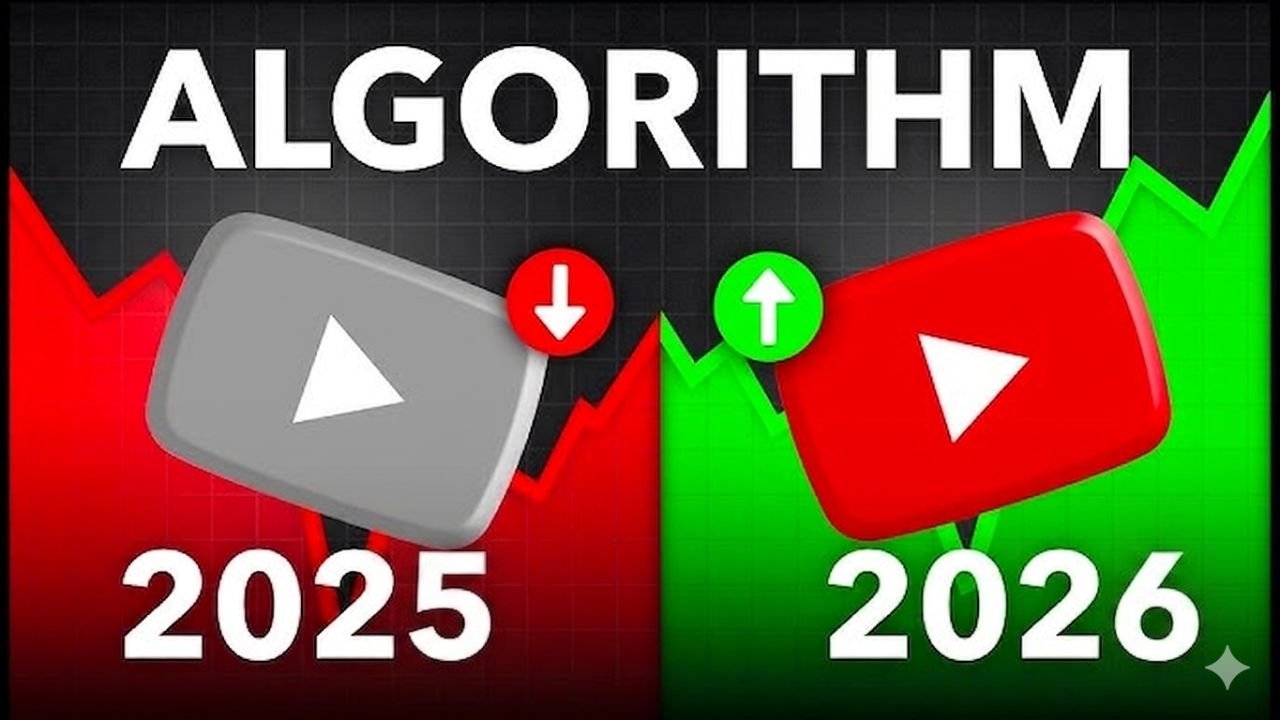
If your views have dropped, your impressions have flatlined, or your channel growth has stalled without explanation, you’re not imagining things. The YouTube algorithm change cycle has been one of the most disruptive forces in the creator economy over the past two years — and 2026 has brought yet another significant wave of updates that are reshaping how videos get discovered, recommended, and monetized.
This is the complete, no-fluff guide to every meaningful YouTube algorithm change you need to understand right now. Whether you’re a full-time creator, a brand building an audience, or a marketing strategist managing YouTube as a traffic channel, this guide gives you the full picture: what changed, why it changed, how it’s affecting channels of every size, and — most importantly — what you should do about it.
Why the YouTube Algorithm Change Conversation Matters More Than Ever
YouTube is no longer just a video platform. With over 2.7 billion logged-in monthly users, it is the world’s second-largest search engine, a dominant social media platform, a live streaming destination, a podcast hub, and an increasingly powerful shopping channel. Every YouTube algorithm change ripples through all of these functions simultaneously.
For creators, the stakes have never been higher. The platform generated over $31 billion in advertising revenue in 2024 alone, and the YouTube creator economy has expanded to include not just ad revenue but memberships, Super Thanks, Super Chats, shopping integrations, and YouTube Premium revenue sharing. When the algorithm shifts, it doesn’t just affect view counts — it affects livelihoods.
This is why YouTube creator economy news today is consumed so voraciously. Creators aren’t just hobbyists anymore. They’re small business owners, and the algorithm is their most powerful — and most unpredictable — business partner.
Did YouTube Change Its Algorithm? The Direct Answer
Let’s start with the question millions of creators are typing into search right now: did YouTube change its algorithm in 2025 and into 2026?
Yes — significantly, repeatedly, and across multiple systems simultaneously.
YouTube has never operated on a single monolithic algorithm. It’s a system of interconnected machine learning models, each governing a different part of the platform: the Home feed, Search results, the Shorts feed, Up Next recommendations, Trending, Subscriptions, and Notifications. When people ask “did YouTube change its algorithm?”, they’re usually responding to a change in one or more of these systems — and the answer in recent months is that nearly all of them have been updated.
Here are the most significant changes that have been confirmed or widely documented:
The 6 Biggest YouTube Algorithm Changes in 2025–2026
1. The Satisfaction Signal Overhaul
The single most impactful YouTube algorithm change of the past 18 months is the expanded weight placed on satisfaction signals over pure engagement signals.
For years, watch time and click-through rate (CTR) were the dominant metrics the algorithm rewarded. If people clicked your thumbnail and watched most of your video, the algorithm pushed it to more people. Simple, measurable, gameable.
In 2025, YouTube accelerated a shift it had been quietly building toward: satisfaction signals now carry significantly more weight. These include:
- Post-watch surveys: YouTube quietly shows a small percentage of users surveys after watching videos (“Did you enjoy this video?” / “Would you watch more from this creator?”). The aggregated results feed directly into recommendation decisions.
- Return rate: How often does someone come back to YouTube and watch your content again after their first exposure?
- Likes-to-views ratio: Not as a vanity metric but as a satisfaction proxy.
- Shares and saves: Actions that suggest the viewer found the content worth preserving or sharing signal deep satisfaction.
The practical result: videos that generate strong watch time but low satisfaction scores are being suppressed. Clickbait videos that hook people into watching but leave them feeling misled or disappointed are seeing dramatic recommendation declines even when raw engagement numbers look fine on the surface.
This is arguably the most creator-friendly YouTube algorithm change in years — it rewards honest, high-quality content over manipulative tactics.
2. Shorts Integration and the Hybrid Audience Strategy
The relationship between YouTube Shorts and long-form content has been completely restructured as part of the broader YouTube algorithm change rollout.
Previously, Shorts and long-form videos operated in largely separate algorithmic silos. A Shorts viewer was a Shorts viewer; a long-form viewer was a long-form viewer. Cross-promotion between the two formats was minimal and often counterproductive — creators who posted Shorts sometimes found their long-form metrics diluted by an influx of Shorts-only viewers.
In 2025–2026, YouTube fundamentally changed this relationship. The algorithm now actively tests whether Shorts viewers can be converted into long-form viewers of the same creator, and vice versa. If a Shorts video captures a viewer and then successfully converts them to watch a related long-form video from the same channel, the algorithm treats this as an exceptionally strong satisfaction and loyalty signal.
What this means practically:
- Shorts are now explicitly a top-of-funnel tool within YouTube’s own recommendation architecture — not just a separate content format
- Creators who build coherent content ecosystems where Shorts and long-form content complement each other are being rewarded with cross-format amplification
- Shorts that feel disconnected from a channel’s long-form identity are less likely to generate sustainable algorithmic lift
This is a fundamental shift in how creators should think about their content strategy — and it’s one of the most discussed topics in YouTube creator economy news today.
3. The Topical Authority Update
Search engine professionals will recognize this concept immediately because YouTube borrowed it directly from Google’s own playbook.
The YouTube algorithm change around topical authority means the platform now evaluates channels holistically, not just video-by-video. A channel that has built deep, consistent content around a specific topic — say, personal finance, home renovation, or Python programming — is given preference in recommendations over a channel with similar individual video metrics but a scattered, inconsistent topic mix.
YouTube has described this internally as evaluating “channel authority” — essentially, how reliably does this channel serve a specific audience’s needs within a defined subject area?
The implications are significant:
- Niche consistency is now algorithmically rewarded more than at any point in YouTube’s history
- Channels that frequently pivot topics or post widely varied content are seeing recommendation suppression, even when individual video performance is strong
- New creators who start with a clear, narrow focus are reaching monetization thresholds faster than broader channels with comparable subscriber growth
This update has been particularly discussed in YouTube creator economy news today because it validates the advice creators have been given for years — niche down — and has finally made that advice algorithmically provable.
4. The Retention Curve Revolution
The YouTube algorithm change affecting retention analysis is technical but critically important.
Previously, YouTube’s algorithm primarily looked at average view duration and the overall percentage of a video watched. A 10-minute video with 6 minutes of average watch time was treated as a strong performer.
The updated system now analyzes the shape of the retention curve, not just the average. Specifically, the algorithm flags:
- Cliff drops: Massive drop-offs at a specific timestamp that suggest the video failed to deliver on its promise at that point
- Gradual decay vs. abrupt exits: A gradual, natural decline suggests the content fulfilled its purpose; an abrupt mid-video exit suggests something went wrong
- Re-watches: Sections of videos that people rewind and rewatch are treated as signals of exceptional value
- Skip patterns: Heavy skipping behavior in a specific section — even without exits — is now a negative signal
Creators who obsess over their retention curves in YouTube Studio will notice this change most acutely. It rewards tight, well-paced videos over artificially padded content designed to hit watch-time targets.
5. The Creator-Viewer Relationship Score
This is the most quietly transformative element of the recent YouTube algorithm change cycle.
YouTube now maintains what is effectively a relationship score between individual creators and individual viewers. Based on a viewer’s history with a channel — how many videos they’ve watched, how recently, how deeply, whether they interact — the algorithm assigns a “relationship strength” score.
Channels with high relationship scores across a significant portion of their subscriber base receive:
- Higher Subscription feed priority (your subscribers actually see your videos)
- More aggressive recommendations to viewers who have watched similar content in the past
- Greater tolerance for experimental videos that temporarily underperform
Channels with weak relationship scores — meaning subscribers who subscribed but rarely return — are systematically deprioritized, even if the raw subscriber count is large.
This explains a phenomenon that has confused creators for years: why channels with 500K subscribers can get fewer views than channels with 50K subscribers. The answer, under the new system, is relationship depth — not follower count.
6. AI-Powered Content Classification and Context
The final major YouTube algorithm change involves how YouTube categorizes and contextualizes videos at the point of upload.
YouTube has dramatically upgraded its AI content understanding systems. The platform now analyzes:
- Spoken words (via transcription) and their semantic relevance to the video’s stated topic
- Visual content — what objects, settings, and people appear on screen
- Thumbnail-to-content alignment — whether the thumbnail accurately represents what happens in the video
- Title-to-content alignment — whether the promised topic is actually delivered
- Chapter markers and timestamps — treated as semantic signals about content structure
The practical result: you can no longer rely on keyword-stuffed titles and thumbnails to misrepresent your content. The algorithm now “watches” your video and cross-references what it sees with what you’ve promised. Mismatches between packaging and content are a growing suppression trigger.
How the YouTube Algorithm Change Affects Different Creator Tiers
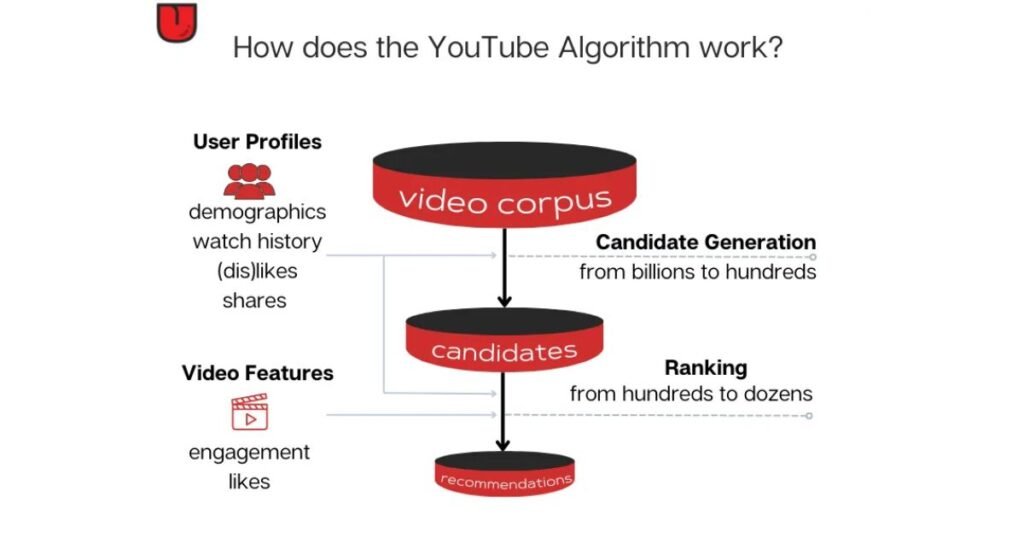
The impact of the recent YouTube algorithm change isn’t uniform across creator categories. Here’s how it breaks down:
Small Creators (Under 10K Subscribers)
The news is largely positive. The topical authority update and the relationship score system both disproportionately reward new, niche-focused creators who build genuine communities — even small ones. YouTube has also expanded the eligibility criteria for the YouTube Partner Program (YPP), lowering barriers to monetization for smaller creators.
The challenge for small creators is that the satisfaction signal system requires a large enough sample size to generate reliable data. Small channels may experience more volatile algorithmic behavior simply because there isn’t enough viewer data to form stable signals.
Mid-Tier Creators (10K–500K Subscribers)
This is the most complex tier under the new YouTube algorithm change environment. Mid-tier creators often have the most to gain and the most to lose.
Channels that built their audiences on clickbait, reaction content, or inconsistent topics are experiencing the sharpest declines. Channels that have built loyal, returning audiences around a consistent niche are seeing accelerated growth — sometimes dramatically.
Large Creators and Media Companies (500K+ Subscribers)
Large channels are experiencing a leveling effect. The relationship score system means that having millions of subscribers doesn’t guarantee reach if those subscribers aren’t actively engaged. Several high-profile channels with subscriber counts in the millions have seen significant view declines, while smaller, more engaged channels in their niches have grown.
What YouTube Has Said Officially About Algorithm Changes
YouTube is rarely explicit about algorithm changes, but several signals from the platform are worth noting:
- YouTube’s Creator Liaison, Rene Ritchie, has increasingly communicated directly with creators via social media about what the algorithm does and doesn’t reward — a transparency effort that began in earnest in 2023 and has continued through 2026.
- YouTube’s official Creator Academy and Help Center documentation has been updated multiple times to reflect the satisfaction-first philosophy.
- YouTube CEO Neal Mohan has publicly stated that the platform’s long-term strategy prioritizes “viewer satisfaction and creator sustainability” — a clear directional statement about where algorithmic priorities are heading.
The YouTube creator economy news today is increasingly shaped by this growing — though still incomplete — transparency from the platform itself.
Practical Strategies: How to Adapt to the YouTube Algorithm Change
Understanding the YouTube algorithm change is only useful if you translate that understanding into action. Here’s what the data, creator reports, and platform signals suggest you should do:
Prioritize Viewer Satisfaction Over Metric Manipulation
Design every video with one question in mind: “Will someone feel genuinely satisfied — even delighted — after watching this?” Not “Will they click?” Not “Will they keep watching for 70%?” Satisfaction is now the north star.
Concrete actions:
- End videos with a clear sense of resolution or takeaway
- Deliver on every promise made in your title and thumbnail — without exception
- Ask for viewer feedback directly in your community posts and act on it visibly
Build a Coherent Content Ecosystem
Your channel should have a clear identity. A viewer who watches one of your videos should be able to predict, accurately, what your other videos are about. This topical coherence is now directly rewarded.
If your channel covers multiple topics, consider whether they serve the same audience. A channel about “home cooking for busy parents” can legitimately cover recipes, kitchen organization, and meal prep — they all serve the same viewer. A channel that covers home cooking and crypto investing is serving two completely different audiences, and the algorithm will struggle to recommend either to the right people.
Use Shorts Strategically, Not Superficially
Don’t post Shorts just to post Shorts. Every Short should either:
- Be a genuine, standalone piece of value that represents your brand
- Function as a deliberate entry point into a longer-form piece of content
The best strategy is to create Shorts that answer a specific sub-question within a broader topic your long-form content covers, then include a clear but non-forced reference to where viewers can go deeper. The algorithm will reward the conversion.
Obsess Over the First 30 Seconds — Differently Than Before
The retention curve analysis means your intro needs to serve a different purpose than simply “hooking” people to stay. Your first 30 seconds should:
- Immediately confirm that the viewer is in the right place for what they were looking for
- Establish credibility or context without wasting time
- Set a clear expectation for what the video will deliver
Manipulative hooks — “You won’t believe what happens at the end of this video!” — are being actively penalized when viewers leave disappointed that the promised payoff never comes.
Invest in Your Subscriber Relationship
The relationship score system means your subscribers’ behavior matters more than their count. Strategies to improve relationship depth:
- Post consistently so subscribers develop a watching habit
- Use Community posts to maintain presence between uploads
- Create content series that reward viewers who follow along across multiple videos
- Personally respond to comments, especially in the first hour after publishing — this signals community health
Align All Video Metadata with Actual Content
With the AI classification upgrade, your title, thumbnail, description, tags, and chapters need to accurately represent what’s in the video. Not because YouTube will penalize you for inaccuracy immediately — but because misaligned expectations damage satisfaction scores, which feed back into recommendations.
Think of your metadata as a contract with the viewer. The algorithm now has the tools to verify whether you kept that contract.
What’s Coming Next: The Future of YouTube’s Algorithm
Based on patent filings, executive statements, and platform behavior, the next wave of YouTube algorithm change is likely to include:
Agentic AI recommendations: YouTube is testing systems where AI agents actively curate personalized content lineups for individual viewers — moving beyond reactive recommendation to proactive content scheduling. Creators whose content fits neatly into identifiable viewer patterns will benefit most.
Shopping integration signals: As YouTube Commerce grows, the algorithm is expected to incorporate purchase intent and shopping behavior as signals. Creators in product-adjacent niches should pay close attention to how YouTube handles shoppable content.
Longer memory for viewer-creator relationships: Current relationship scores are believed to decay over time. Future updates may create more durable relationship signals that reward creators who have historically delivered consistent satisfaction to specific viewers.
Podcast and audio content expansion: YouTube’s aggressive push into podcasting means algorithm treatment of audio-first content is being actively developed. This is a significant opportunity for creators who haven’t yet explored the format.
The Bottom Line on the YouTube Algorithm Change in 2026
The pattern across every YouTube algorithm change of the past two years is consistent and clear: YouTube is systematically moving away from rewarding engagement manipulation and toward rewarding genuine viewer satisfaction and creator-audience relationships.
This is, fundamentally, good news for creators who make honest, high-quality, audience-focused content. It’s challenging news for creators who built their channels on clickbait, controversy farming, or topic-hopping.
The answer to “did YouTube change its algorithm?” is yes — but more importantly, YouTube has changed what it values. And what it now values aligns more closely with what actually serves viewers and builds sustainable creator businesses than at any point in the platform’s history.
The YouTube creator economy news today tells the story of a platform in genuine maturation: stricter standards, better tools, more transparency, and a reward structure that — for the first time — seems genuinely calibrated to long-term creator sustainability rather than short-term engagement extraction.
For creators willing to adapt, the YouTube algorithm change of 2025–2026 isn’t a crisis. It’s a mandate to do the work properly — and a genuine competitive advantage over the creators who won’t.
Quick Reference: YouTube Algorithm Change Summary
| Algorithm Area | Old Signal | New Signal |
|---|---|---|
| Discovery | Click-through rate | Satisfaction score |
| Recommendations | Watch time % | Retention curve shape |
| Channel authority | Individual video performance | Topical consistency over time |
| Subscriber value | Subscriber count | Relationship depth score |
| Shorts | Isolated metric | Long-form conversion rate |
| Metadata | Keyword stuffing | Content-metadata alignment |
| Community | Comments count | Return visit rate |
People Also Ask
Q1. How often does YouTube update its algorithm?
YouTube’s core recommendation systems are updated continuously through machine learning. Major structural changes — like the satisfaction signal overhaul — happen a few times per year and are rarely announced explicitly.
Q2. Can small creators still grow organically in 2026?
Yes — and the topical authority update has actually made organic growth more accessible for niche, consistent creators than it was during the pure watch-time era.
Q3. Does posting frequency affect the algorithm?
Posting frequency matters less than posting consistency. A channel that posts once a week reliably will outperform a channel that posts five times one week and nothing for the next three.
Q4. Do tags still matter?
Tags are a minor signal. YouTube’s AI can now classify video content directly from transcription and visual analysis. Tags have not disappeared as a signal but they are far less influential than they were in 2018–2020.
Q5. Should I delete underperforming videos?
Generally, no. Deleting videos removes watch time from your channel history and can disrupt the topical authority signals the algorithm has built. Underperforming videos that don’t violate guidelines are typically better left up.
Also Read About: Instagram New Features in 2026: Everything Creators, Businesses, and Users Need to Know